
2013 Contest
Making Work Visible
City University of New York / Labor Arts

Bubby’s Blood
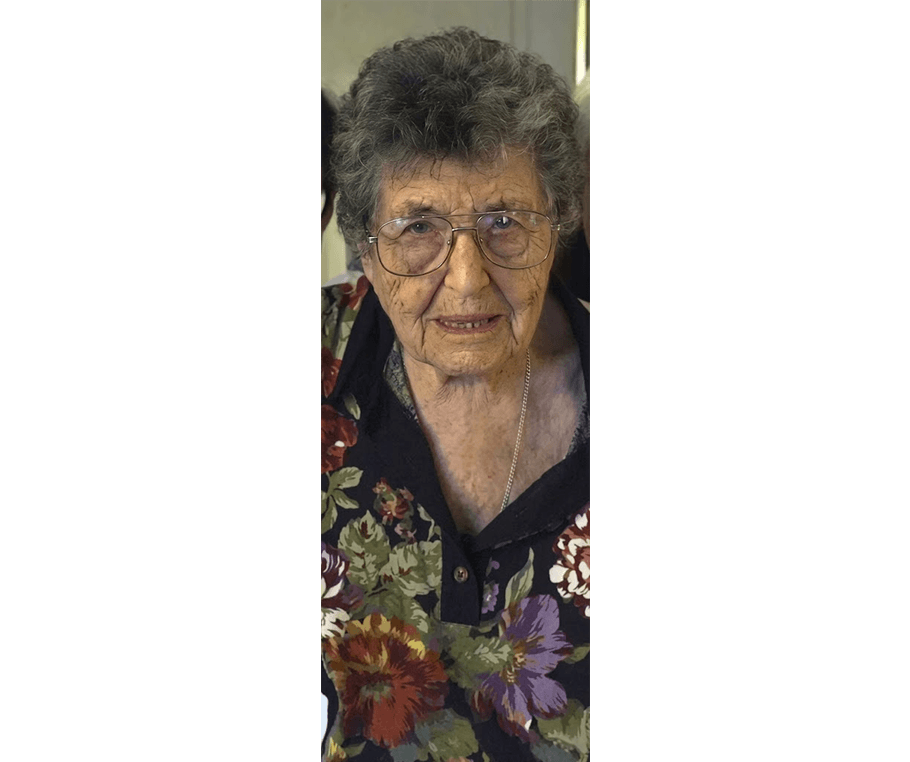
Bubby in Her Brooklyn Apartment, photograph by Lee Kahn, February 2013
Although an eager student, there is one skill I have never been able to completely master: sewing. Over the years, my grandmother, Bubby, has tried sitting me down numerous times and teaching me the skill that saved her life, but her feverish-paced impatience combined with my vexing right-handedness did not ensure for productive sessions. Eventually we reached a compromise that left me relieved and Bubby satisfied; I managed to pick up the modus operandi of “stab and thrust” which enables me to piece together two bits of cloth in a crisis but leaves fine needlepoint out of the question.
To Bubby, sewing is more than a skill. It runs in her blood and makes her blood run. Today, despite being nearly ninety-three years old (which she always admonishes us never to reveal, even in her doctor’s office) and on blood thinners, Bubby still seats herself dutifully in front of her sewing table in her bedroom and asks if we have anything we need her to fix. Her fingers itch to get to work, to make the most of the sunlight left in the day, and perhaps to take a stroll down memory lane.
The year was 1939, and Bubby was on a ship from Poland to the United States. Her mother had filed for a visa for her at the age of fourteen, and now, five years later, it had finally arrived. She traveled alone in the steerage class with sixty-five cents in her pocket. Originally, she had been given $20 by her mother, who had sold her heirloom gold necklace, her only valuable possession, for the price of the visa and a warm woolen coat for Bubby, her oldest daughter. Bubby spent $2 on a telegram to let her aunt know of her arrival, and sent back $18 to her mother so she could buy the family some much-needed food. They had shared a luxurious orange together before her departure, which spoke of a fresh and vibrant new beginning.
It was not to be. When my grandmother arrived in the United States, she stayed at the home of her aunt, her only relative in America. When it became apparent that Bubby had no intention of marrying her pleasant enough but dull first-cousin Julius, which had never previously been part of the equation, her aunt’s attitude toward Bubby changed. If Bubby would not marry her aunt’s son, she was no longer considered family, and certainly not blood. Bubby entered into an indentured servitude, becoming the family maid, and was sent to the factories to work so that she could reimburse her aunt for the ship ticket out of Poland, and for room and board. The aunt was very strict. When Bubby asked her if she minded if she took twelve dollars out of her own paycheck to buy a wristwatch, her aunt refused to allow her niece to do so. Until every last cent for the ticket was repaid, Bubby would not be permitted the luxury of even a modest watch to tell the time.
Ever mindful of the importance of education, Bubby attended high school classes at night. She spent the rest of her youth laboring in the sweatshops with no respite, even on Sundays. In my mind’s eye, I imagine her heavy with fatigue from working at a grueling pace during the regular workweek, and looking forward to a well-deserved day of rest. She would dream of having to clean her aunt’s apartment, and cook for the family, too, but not having to work like a speed demon in the factory on Sunday. Yet another part of Bubby must have been glad that she could take the extra money she earned on Sundays and send it to her family, who was relying on her. What a tremendous responsibility she had on her diminutive shoulders!
When my grandmother talks, in my mind I can see her in the somber and dingy sweatshop in Brooklyn, looking down at her finger when the needle from the machine becomes stuck in her flesh. The foreman saunters over, sees the problem, and casually yanks the needle out with a pair of pliers. The pliers are utilized for another purpose also; when not necessary for extracting sewing needles, they are used to repair the machines. Bubby needs to continue to do her piece-work, as she gets paid solely for each item she churns out. She sorely needs the money, so she says nothing. Only the beads of perspiration coating her now ashen face betray her pain. The rivulets of blood seep generously, as she tries to stop them from contaminating the garment she is working on, and so Bubby continues with her labor. The rivers of red flow like the waters that separate her from her loved ones, unwanted, unrelentless, but nonetheless pooling oceans that divide her from her family in Bialykamin, Poland, where she lived like a church mouse. Unlike Bubby, even church mice are contented, as long as they are with their families. Her eyes stayed dry, she always says, even when the foreman had to pull needles out of her fingers with pliers and did nothing to relieve her pain or clean the wound. Crying accomplishes nothing.
Ordinarily a scrupulously honest person, my teenaged grandmother would do what it took to keep working. She would tell the hiring boss whatever he needed to hear for her to work at the factory. She was older. She had experience. Of course, she knew how to use that machine. She always hoped she could learn fast enough and could figure out how to work the machine in her head before it would enter her body.
I could almost see the demanding bosses to whom the workers, like Bubby, were identical, replaceable spokes in a wheel, snapping about increasing productivity to the immigrant working women. The women who sewed silently next to Bubby on the Singer and Merrow sewing machines also kept up a brisk pace, but none worked so feverishly as Bubby who knew that her family’s future was in her hands. Those new friends fortunate enough to be born in America and receive an education would work in offices, and never know the humiliation of working in the joyless, degrading factory for the often cruel and abusive bosses.
Bubby would work very hard at the factories, convinced that if she could work harder, just a little bit harder, she could earn enough to bring her family to America. After all, the Germans had invaded Poland already, and there was no time to waste if she were to save her family. They were the only family she had left, as she was reminded when her aunt invited Bubby to dinner along with her husband and three strapping sons. Bubby was happy to be included with the family (how she missed her own parents, grandparents, and brothers and sisters!) until the end of the meal. Her aunt handed Bubby a separate bill, as the dinner was, as her aunt explained to a crestfallen Bubby, for “family only.”
Bubby never saw her immediate family again. One day, a visitor knocked on her door to relay the news that he had been hiding in her parents’ cellar and had witnessed her entire family being murdered, shot to death by their next-door neighbors during the Holocaust, their blood spattering in Poland as hers leaked onto the material she attempted to sew. It was at the factory, that Bubby, who was now alone in the world, was able to learn the value of hard work and persistence, in order to create a better life for herself and not be forced to depend on anyone.
It was this outlook on life, derived from the factories that kept her from succumbing to tuberculosis when it was a virtual death sentence in the 1950s. All of her invalid friends in the hospital ward died, refusing to eat the putrid hospital food or swallow the newfangled pills that enlarged the patients’ livers, but killed the tuberculosis. Bubby knew that she had to persevere, just like she did in the factory, and that resilient spirit kept her alive. Her liver became enlarged, her lungs were now scarred, but she was alive. The blood was still moving, and so was she. The grandmother that I have always known is fearless.
When her older son was twenty, he helped her to improve her English, tutoring her in her reading and writing skills so that she became proficient enough to pass a test and merit a job working for the city. But it was at the factories where Bubby learned to keep going, no matter how unbearable life may have seemed or how bleak the present appeared, because she knew the potential of a promising future.
Today I live in another world. I wear mass-produced clothing instead of sewing them. I coordinate blood drives where I rally my peers to freely give theirs, rather than losing my own because of inexperience with sewing machines coupled with the desperate hunger to work at a factory, which was the only hope of a job for an uneducated, non-English speaking immigrant teenager.
And yet, Bubby’s story is part of who I am. Through her narratives, she has imparted her spirit in her blood to drive harder, be more efficient, and make something of myself in the workforce so that I will not have to rely on anyone. It is her commitment to hard labor that motivates me to study. When I agonize over my final exams, I realize how trivial my battles are, compared to her sewing assignments. I know that I may be tired at the end of the day from a challenging day at school, but my feet are nowhere near as tired and swollen as hers were at the end of a long shift. I take comfort in the fact that I will hopefully have the opportunity to work hard, but in a different setting, using my education gained at CUNY to toil but in a subject matter about which I am passionate. I have the agency to write my own future because of the past that she has shared with me, complete with blood, sweat, and the absence of tears.