
2019 Contest
Making Work Visible
City University of New York / Labor Arts
Introduction
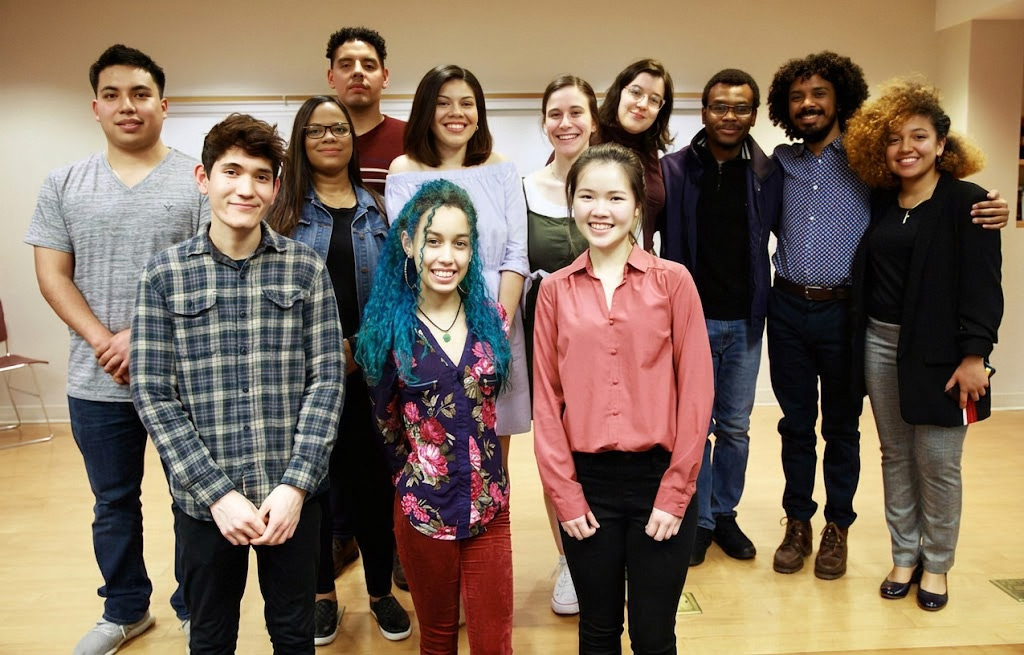 This group of extraordinary young authors and artists show us new perspectives on work with their creative and thoughtful essays, poetry and visual art. Many of them talk about work that is too often unseen, from the front lines of the new economy where precariousservice jobs reign. Their efforts fulfill the goal of this CUNY/LaborArts contest—to expand student thinking about the history of work, and to provide opportunities to make links between individual lived experience and larger social issues.
Here are two excerpts–we hope you read all the works in their entirety. The first is from Eva McGill’s essay “America Runs on Dunkin’: Analyzing Hierarchies and Customer-Employee Relations in the Coffee Shop Industry”—
5 AM—At this time of the day, we served nurses (who often work early morning shifts or overnight shifts), construction workers, and folks who worked outside the confines of the formal economy. Not many other coffee shops open their doors at 5 AM. … Dunkin’ Donuts’ widespread accessibility and ability to accommodate is due to the workers at Dunkin’ Donuts stores. These workers, not the owners or those working at Dunkin’ Donuts’ corporate office, wake up early, work long shifts for minimum wage, deal with impatient customers, prepare food and drinks, sacrifice their weekends, forfeit spending time with family, and work in a perpetual state of being understaffed and undervalued. Without these people, Dunkin’ Donuts, one of the most popular coffee chains, would cease to function.
From Christa Hill’s short story “This is Not Consent”—
Last night I stood and looked in my drawer where I kept my underwear. I had comfy, sexy, casual, and even granny panties folded into neat squares. Some were laced, some were covered in glitter, silky, and some were basic and bland. I might’ve bought them because I liked the fabric or because the colors complimented my skin. Or maybe they looked comfortable.
Never did I ever stand in a shop to consider my new underwear and think, “But will I get myself raped in these though?”
We sincerely hope that these young authors and artists continue on with their work—their voices demand to be heard.
Now in its ninth year, the contest is open to all CUNY undergraduates. Entries are judged according to originality, content and style. Student writers and artists draw upon history, their close observation of the world around them, and a wealth of first hand experiences to link their work to the spirit of labor arts. Every year professors judging the contest reflect on the value of providing opportunities for the students to seriously interrogate their own life experiences and that of those around them.
Background & Credits
The CUNY/Labor Arts contest aims to give students credit for thinking and writing about labor history, broadly defined, and is open to any undergraduate attending a CUNY college. Begun in 2010, it encourages students to write creatively and analytically about work and workers, to make art about work and workers, and to link their efforts to the spirit of LaborArts.
We would like to thank all of the students who submitted work for the 2018–19 contest, and to congratulate the authors of the prize-winning essays and poems and the creators of the visual art featured in this exhibit. All CUNY students are encouraged to begin considering possible themes for entries in next year’s contest. Guidelines for the 2019–20 contest will be available in fall 2019; the guidelines used for this contest can be found here.
The contest is sponsored by LaborArts, with major funding from the Workforce Development Institute, and additional support from the Consortium for Worker Education. It was organized this year by Rachel Bernstein and Evelyn Jones Rich (LaborArts) and Patrick Kavanagh (CUNY).
Special thanks to the judges: Professor Jennifer McCoy (Visual Art), Professor Matt Arnold (Poetry), Adjunct Professor Drew Pham (Fiction) and Director of Graduate Studies Patrick Kavanagh (Non-Fiction). Many thanks to the Brooklyn College Graduate Center for Worker Education’s director Lucas Rubin and his extraordinary staff, including Mohammed Hossain and Anselma Rodriguez; to the staff in Director Kavanagh’s office, particularly Arelis Berroa; and to LaborArts intern Shanika Carlies.
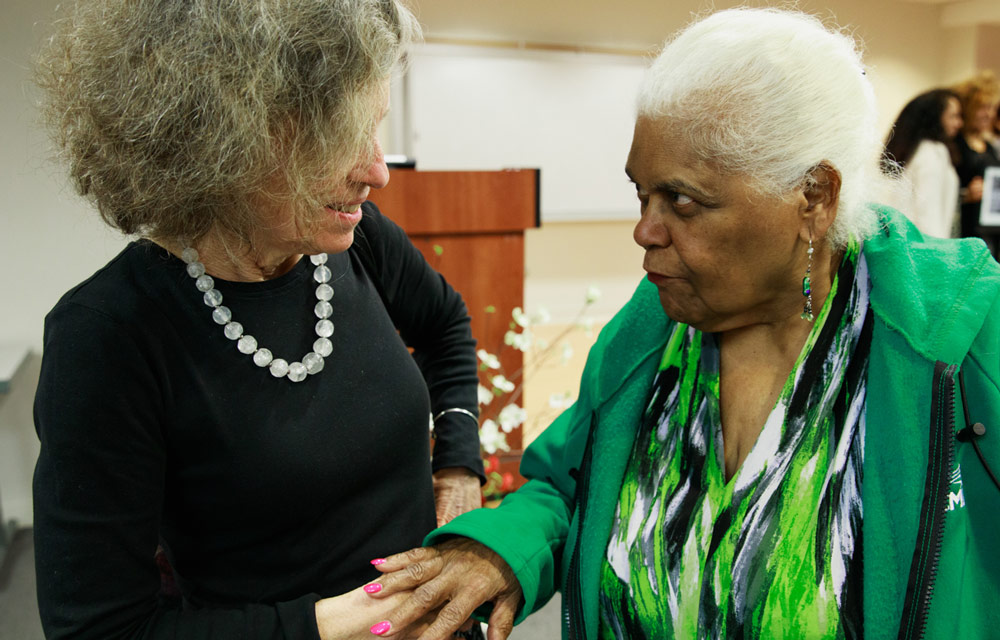
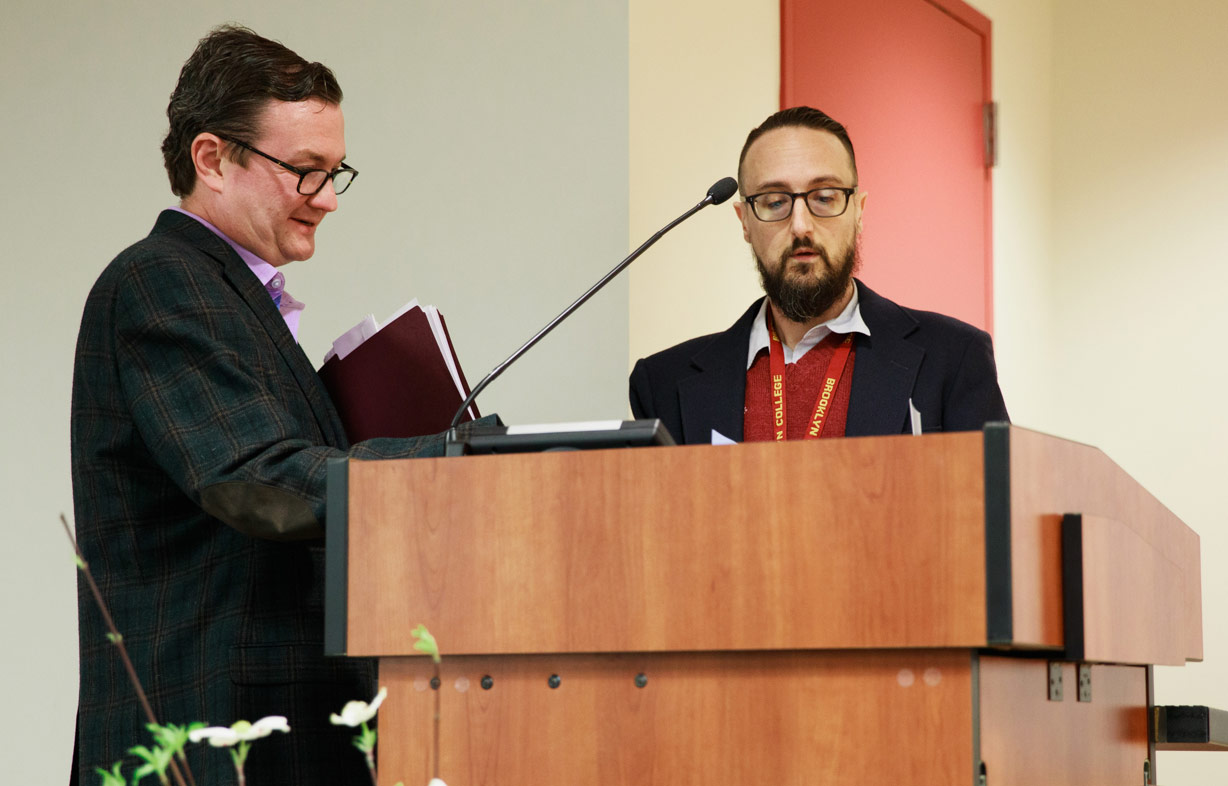
The photographs of students and event speakers were taken by photographer David Rozenblyum at the Awards Ceremony, held at the Brooklyn College Graduate Center for Worker Education at 25 Broadway in Lower Manhattan on Monday April 29, 2019.