
2016 Contest
Making Work Visible
City University of New York / Labor Arts

The Invisibles
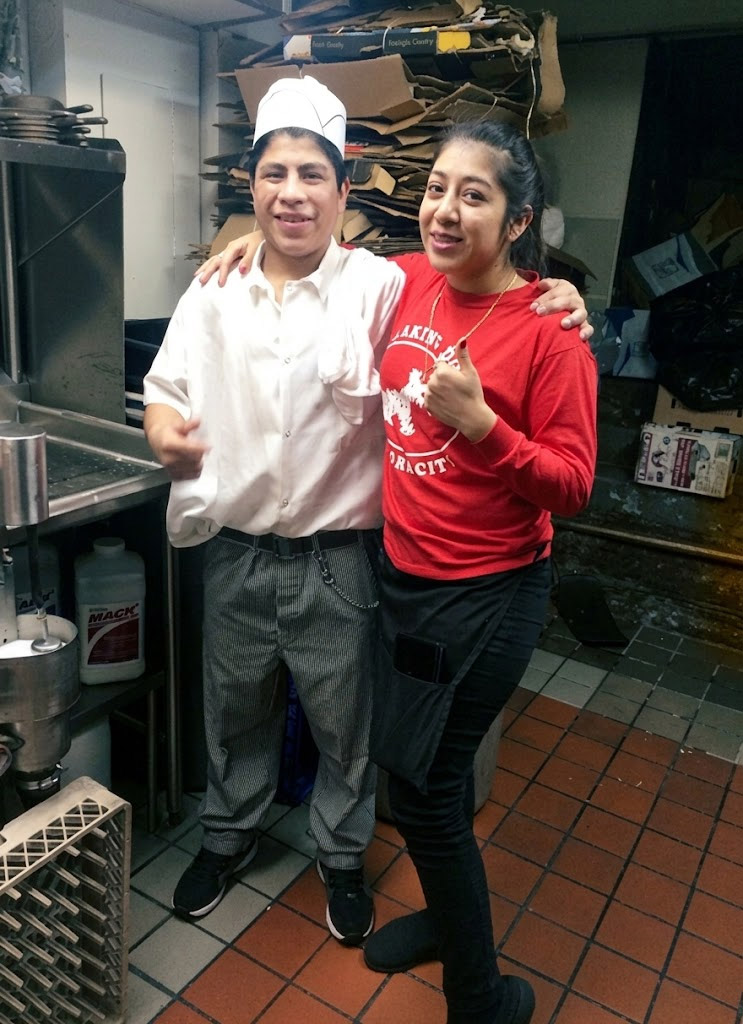
The Invisibles, Jenifer Vivar, February 2016
They worked
they were always on time
they were never late
they never spoke back when they were insulted
they worked
they never took days off that were not on the calendar
they never went on strike without permission
they worked ten days a week
and were only paid for five
Pedro Pietri, “Puerto Rican Obituary” (1973)
They are there but nobody notices them. They get up very early in the morning right before everyone else and go to bed so late at night when there is almost nobody on the streets. They look hopeless, exhausted; they work fifteen hours a day leaving them with no time to dream, to progress. Who are they? Those who make coffee this morning at the local cafeteria, those who prepare that delicious breakfast sandwich before work, those who serve food at a restaurant, those who clean houses. Open your eyes and look carefully, they are there camouflaged among the crowd. They work hard to live “the better life” known as the American dream although it feels pretty close to a nightmare.
A small paycheck is coming every week but at least something is better than nothing. Some others have the misfortune of being unemployed. “I’m looking for a job,” one said to a business owner one day taking his cap down as sign of reverence. “I can do anything and I learn fast,” he said looking down, as if he was almost kneeling down to get the job. “Not right now,” the owner answered in a cold tone and turned around while making a phone call and giving orders to another employee. The man’s eyes look hopeless but he recovers fast (perhaps he doesn’t want anybody to notice his despair) then walks away. More will come back later asking for the same. They will say, “do you need a dishwasher? A delivery guy? A cook? Server? Cashier? One that can do all of them? I can do it all, give me a job.” The same scene will be repeated all over again. They will continue to look for a job in other places where, perchance, the answer will be more favorable. Some others are working at their jobs and doing anything they can to keep it, even tolerating the screams of a clumsy man who believes he is better than everybody. That picture, an image of a slave being mistreated by his owner, is just so disgusting that no one wants to see it. There is an old man washing dishes. His age makes him work slowly and as result the manager is angry. “Hey stupid you better move your ass or I’ll fire you” the manager says. Suddenly the old man starts to shake and says “ye-es, yes ya mero.” People look at him with pity though they can’t do anything. There is another young boy washing dishes, he cannot be older than thirteen years old but please keep the secret because he needs the money and has promised his little sister to pay for her school and to buy her a big beautiful doll and to his mother to help her with the house’s expenses.
This happens all the time every day, right behind that elegant door of that beautiful restaurant, right next to that convenience store, right there in that super market. Everything happens indoors, nobody needs nor wants to know about this “dilemma.” People possibly think “why should I get involved?” or “that isn’t my business” or “that is the role they get to play” and countless more. Is there any solution? Mistreatment has become so usual and at the same time so undetectable to the eyes of the world. What can people do if they are “illegals”? What kind of rights do they posses? They have no options if they want to keep their jobs. They must tolerate humiliations in order to give their families bread to eat. For them, family is worth that and much more. The working class of my city is being abused, the working class of my city is being hurt, the working class of my city is being repressed. They are not bad people, they did not come here to steal, all they ask for is a job and to work with dignity. They will not take anything that is given, they will earn it with the sweat of their brows.