
2018 Contest
Making Work Visible
City University of New York / Labor Arts
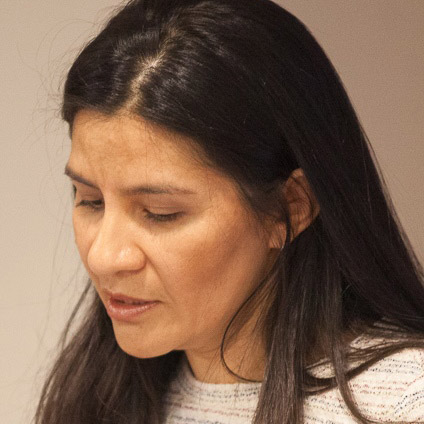
Counterparts

Saint Agatha School, Erin DeGregorio, 2018
It is September of 2012, the beginning of a new school year, and my son Zuriel is going to pre-K in a Catholic school in Sunset Park, a low-income neighborhood in Brooklyn. My husband and I have heard that public schools in this zone are bad, and because we want my son to have a good education, we have decided to send him to Saint Michael Catholic School. My husband is making a tremendous sacrifice to send him there by paying almost 500 dollars a month.
The school is located is in an old brick building painted in ivory; adjacent to the school is the rectory and the church. The church is big, and the windows are tinted in different colors. The walls are decorated with religious statues, and the altar is just a table covered with a long white fabric with a Bible on top, but underneath it is always decorated with colorful flowers like chrysanthemums, daisies, carnations, and red and white roses. The school is old and sometimes cold. The heat is not strong enough to keep such an old big building warm. Chairs and tables are very old fashioned. It seems that the school hasn’t replaced them in decades; I have the same impression about the teachers. The only young teacher in the building is Ms. Di Rosa, the pre-K teacher; I couldn’t be happier to see my son going to her class.
Catholic schools require parents to volunteer twenty hours a year or pay a service fee, so I decided to volunteer to save that money. By June of 2013 I have completed many more than twenty hours. By now, I know everybody in the school and everybody knows me. School is over, and my husband and I are still thinking that the Catholic school is the best choice for my son.
It is July 2013 and I am cooking at home when the phone rings.
Linda, one of the school’s administrators, calls to ask me if I want to work as a Kindergarten teacher’s aide the following school year in exchange for Zuriel’s tuition.
“That’s fantastic, Linda, of course I accept!”
This will give me the opportunity not only to be close to my kids but also to learn the language since I speak very little English. All the English background I have is from those two months I spent in London and a few months of English classes in the American Language Communication Center (ALCC), an English school in Manhattan.
I come from a working-class family in Peru. In March of 1998 I left the nest to go to Switzerland to learn French and make some money to pay for my college education because my parents couldn’t finance the expenses. I first planned to stay there only two years, but things didn’t go as planned and I ended up living in Switzerland for almost eight years.
Back in 2002, while I was living in Switzerland, I decided to go to London because I wanted to learn English. English is very important, and I knew that sooner or later I was going to need it to pursue my education. I saved some money, paid for my English school and housing for two months, and bought my airplane ticket to London. I had a good time in London. I got to know the city very well since I stayed there for two months doing nothing else
but studying English and being a tourist. I got to know all the museums, the Big Ben, Buckingham Palace, Camden Place, and many other places. After completing my language adventure in London, I went back to Switzerland because I had to return to my job in the cafeteria of a gym in the city of Lausanne.
In December of 2003 I came to the United States to visit Pedro, one of my best friends from Peru. We both come from the same neighborhood in Callao, and we were very close until I left my country. I learned he had traveled to the United States, and in those day our ways of communication were limited. Facebook wasn’t invented yet, and email was still something difficult for us since we didn’t grow up immersed in this technology. I finally got in contact with him after almost fifteen years. We stayed in touch almost every week until he invited me to visit New York–all expenses paid. This sounded good. I planned my vacation for that year and came to New York.
My visit only lasted twelve days, but those twelve days were enough to change the course of my life. We fell in love, and for two years I traveled back and forth between Switzerland and the United States. Then in March of 2005 I decided to move permanently to the United States. I was excited to start a new life in Ozone Park, Brooklyn, and I wanted to learn more English.
In September of that year, I found out I was expecting my first child. Zuriel was born in July of 2006, so I quit school and moved with my husband to a bigger apartment. Since then, I’ve been dedicated to taking care of my family.
It is September 2013, the first day of school. Today is not only my son’s first day in Kindergarten and my chance to work in his class, but my daughter starts pre-K in Ms. Di Rosa’s class. After the bell rings and all the students are escorted to their classrooms, I run to the office to receive instructions for the day. Mrs. Marino, the secretary, says. “Go to Mrs. Osario class. She is waiting for you.”
I have been in this room several times, but I have never seen the classroom in detail. Everything in the classroom is colorful–chairs, tables, even the foam mat. The walls have plenty of charts: ABC’s, numbers, upper and lower cases, animals, shapes, and colors.
There is also a little room that the teacher keeps closed during the day. The classroom is divided into two parts by several bookshelves. Mr. Osario gave the bookshelves to his wife
about a year ago when his company refurnished his office. One side of the room is designated for tables, chairs, lunch boxes, coats, book packs, and books. On the other side is Mrs. Osario’s desk, and the foam mat seating area is meant for the morning’s teaching routine where the kids learn the months of the year, days of the week, numbers, and sight words from the smartboard. My desk is in the middle of the room by the windows between the two divisions.
I know Mrs. Osario is from Trinidad and that her parents brought her to the United States when she was ten. Parents at school think she is from the Dominican Republic, maybe because people like to make assumptions depending on the color of your skin.
She has a very strong personality and wants everything to be perfect. Every year the school prepares a Christmas show. This is an opportunity for families to see their kids perform and for the school to raise some money. Mrs. Osario is responsible for producing the show. She collects all the information concerning the show. For example, she must know exactly what the kids are going to perform and insists that every teacher make sure that the lyrics are “clean” (no bad words). She also makes the rehearsal schedule and everybody needs to arrive to rehearsal at the exact time.
She then chooses a teacher to be responsible for the scenography. This year it’s Mr. Chang, but he is new and doesn’t know what the stage should look like, so he asks me for help because he knows I like to decorate. When Mrs. Osario finds out, she intervenes. “That’s not your job,” she says to me, “let him do what he needs to do.”
I sometimes don’t like the way she talks to me or the way she looks at people. The first week, she asked me, “Do you understand what I’m saying?”
“Sure, I may not talk too much, but I listen and understand what you say.”
She then made a face. Maybe she assumed that I didn’t talk much because I didn’t understand English.
It is December and almost all my work for the year is done. I have created a morning routine for the kids, from putting their stuff away, to choosing three kids per week to give out the coloring books, to taking them in small groups to the restrooms. I have cut templates for the year and separated them by month. I have opened the useless closet and transformed it into the new lunch box and coat room organized by names, and I have even changed the layout of the classroom. We are no longer divided by the old metal bookshelves.
I have tried my best to do a good job, and Mrs. Osario seems to appreciate it. She even makes a comment about how organized, clean, and open the classroom looks. I take that as a compliment, but she is still reluctant to become my friend. I don’t expect that; I’m there to do my job.
Sometime the atmosphere is tense between Mrs. Osario and me because we disagree on certain things. One day we got a new student, a little girl from China. The school is located in the Chinese neighborhood of Sunset Park. I know that the Chinese kids who come to this school were born in the United States but are sent to China when they are around two years old to live with their grandparents. Then they return to the United States to start Kindergarten. There are two reasons for this: first, the kids are sent to China because their parents can’t take care of them and childcare in New York City is too expensive. The parents send their children to live with the grandparents while they make some money and get financially ready to support their kids when they come back to start Kindergarten. And second, the parents know that the best way to create a strong bond between their children and their language and culture is by sending them to live in China.
As a parent I cannot begin to imagine the pain of being separated from my kids.
This girl is one of several students who don’t speak English in class. The fact that some of her students don’t speak English well irritates Mrs. Osario because she can’t keep up with her teaching. She sometimes gives up on these kids because there is no way for her to communicate with them, but I know what it is to be misunderstood due to language differences. I have experienced this terrible feeling when I went to Switzerland and didn’t speech French and when I went to London and didn’t speak English. Believe me…. this is frustrating. Being myself an immigrant I can feel empathy with these kids. I can’t understand why she can’t feel some empathy with them, being herself an immigrant. This might come from the fact that she comes from another English-speaking country and didn’t have to confront those language challenges.
I propose making a group with the kids who don’t speak English and teaching them to read as I did with my daughter. Surprisingly, she accepts, but not for long. After a few weeks, she abruptly decides to stop the help I was giving to the kids. When I asked her, “Why don’t you want me to continue? The kids are doing better in school,” she again said to me in an arrogant way, “I will not argue with you.”
This is the second time she has treated me like nothing. I can’t accept this anymore, so I leave the classroom and go to the kitchen where I find Mr. Mario and Mr. Daniel, the two school custodians. When I start crying, they know that something is going on.
“Why does she have to be so mean?” I ask. “She doesn’t appreciate what I do. I don’t get well paid for what I’m doing, and I’m still doing my best.”
“Be patient my dear. She’s a good person, but she’s sometimes possessed by her bad temper.” Mr. Mario starts laughing and so do I. After I drink a coffee, I go back to the classroom.
It is February and Mrs. Osario will be out of school for a couple of weeks while she recovers from surgery. Mr. Chang will substitute for her, but Mr. Chang is the computer teacher. He is young, and he doesn’t know anything about kindergarteners.
I end up leading the class for two weeks, and Mr. Chang is my assistant. I know the routine, but for him, cutting paper, putting kids’ folders in their backpacks, and taking them to the restroom is something he has probably never done before. Not knowing the kids’ name makes all this more complicated for him.
After Mrs. Osario is back on her duties, she lets me know how grateful she is that I took care of her class. She is now treating me in a different way. She asks me how I feel, how my weekend was, and what my summer plans are. I believe this is her way to show some appreciation.
At the end of February, she asks me a question, “Have you ever had Zuriel tested for problems with attention?”
“No, never. Should I?”
I can tell from the way she asks me this question that she is in concerned about Zuriel and feels that something may not be right.
“Have you noticed he is always looking out the window?”
“I have noticed he gets distracted, but this could true of any kid of his age.”
How could she know something is wrong with my kid? I’m supposed to know better; I’m the mother! I know my son has some speech delays, but I never imagined confronting a situation like my son needing to be tested for learning issues. I must call the pediatrician; he should know better.
On the day of the appointment, Dr. Carvin asks me questions about Zuriel: “Does Zuriel take a lot of time to finish his homework?” “Does he constantly repeat the same question?” “Does he make careless mistakes or speak nonsense?” I respond “yes” to all his questions.
What does this mean?
Dr. Carvin tells me that my son could have ADHD, but he would like to refer me to a specialist, Dr. Hassan, a neurologist who specializes in kids with ADHD. All this situation is new for me. I heard about ADHD, or attention deficit disorder, a few years ago, but I believed that only excessively active kids could have ADHD. My son is completely the opposite; I would describe him as a daydreamer.
Dr. Hassan asks me the same questions Dr. Carvin asked me a few days before and a few others. After I answer all his questions, he is ready to give me the diagnosis. “Yes, Zuriel has ADHD, but the Inattentive type.” This means that Zuriel is unable to focus for a long period of time, and he is unable to stay on or easily move from one task to another. This can affect his grades, or worse, his self-esteem.
What type of diagnosis is this? In the appointment he never turns to look at my son or examine him at any moment.
He explains to me the medications that are available on the market and prescribes one of these to Zuriel. I take the prescription even though I want to keep my son away from those medications and schedule an appointment for a follow up.
The next day I tell Mrs. Osario what the doctor has confirmed. “He has ADHD,” I say. I’m so sad wondering if my son will be OK.
“He will be OK,” Mrs. Osario reassures me. How could she be so sure? “I know what you’re going through.” It turns out her son has ADHD. She has done her best to make him succeed, but it is hard work.
It is April and Zuriel is taking medication every day before going to school. I have done a lot of research, and this seems to be the only solution. Mrs. Osario doesn’t agree with me. She doesn’t like to see Zuriel so quiet. Neither do I, but I’m giving it a try. She allows me to have some one-on-one time with Zuriel during classwork. I’m doing my best, but nothing has changed. He is still inattentive, so I decide to take him off medication.
Mrs. Osario recommends that I take Zuriel to see a specialist at St John’s University in Queens, where she took her son many years ago to be diagnosed. I hesitate because I can’t handle more bad news. We’ll see next year.
By May, Mrs. Osario is friendlier. She sincerely appreciates my work in her classroom; she lets me know that I am doing a good job, and she tells me she is happy that I will work in her classroom next year. By the end of the month, we start having more personal conversations. I know more about her family and she knows more about mine.
It is June, graduation day, and the children are moving up to first grade well prepared. The kids who speak Chinese are doing better. Mrs. Osario and I have overcome our differences for the sake of the kids in kindergarten. We have made a good team. We are now planning things for next year. I truly appreciate all I have learned from her, from our conversations, and from our arguments also. We have found we have more things in common than differences. She is a dedicated mother and a disciplined person, and so am I. I learned that she is not arrogant, she is exquisite, and sometimes very intense. She has taught me a lot in these 160 days. We have had to see each other every day, Monday to Friday, from 8:00 a.m. to 3:00 p.m. We think it would a good idea to get together over the summer since she has free time: school is over, her husband is at work, and her kids with are with their friends. Our relationship has changed for the good; we have created a bond, and I can call this “friendship.” I can’t wait to see what next year will bring us.