
2018 Contest
Making Work Visible
City University of New York / Labor Arts

Music Notes on Life-sized Harp in Metal and Ink
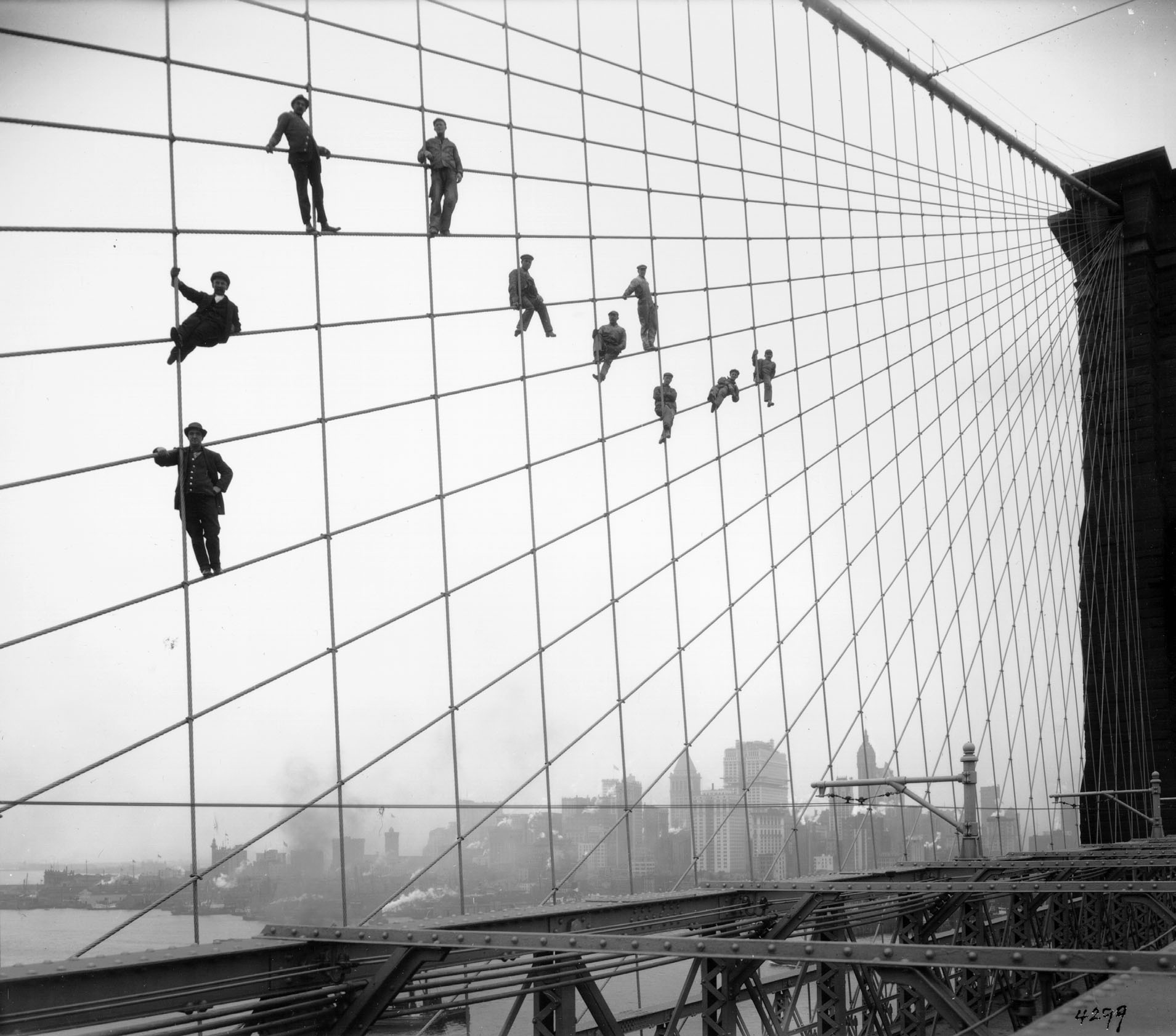
Painters on the Brooklyn Bridge, Eugene de Salignac, 1914, LaborArts
There are people up there, marooned on the grid
of our vertical city.
Painting the fingertips of the skyline.
They look like coordinate points on a municipal timeline. Here, is the notch where they built the Brooklyn bridge. It took this many hands to stretch across the urban sea, this many knots to tow the cable out, lassoing the
pintods on Bedford avenue
to the brownstones in the Bloomingdale district.
This here, is the marker for the great panic of ’83,
starting on the Manhattan end,
rumors rippling all the way to Brooklyn along the metal grating.
And here, this here, is where the sandhogs dug
the foundation below the bridge.
Underwater, in pressurized chambers, laying trench lines
in the river like day-crossers trapped in caisson boxes.
And finally, this is the painter’s notch,
<em>De Salignac’s</em> notch.
From the top of the suspenders, the
swallow of water must have appeared blurry
and almost matted to the floor of the earth.
At eye level with corporate buildings,
if you dropped a pipe,
a paintbrush,
it would take full seconds before they would puncture the river.
Inside the overfilled sky,
the shape of an opened mouth,
a netting of steel wires has swallowed a handful
of bridge welders and dynamite haulers,
holding up the intermediate space between the boroughs,
crooning their necks over the cables to find
tiny squares in which to look out over the river into the patchwork of
Brooklyn and the necessary noise of Manhattan.
Careful to steady themselves over their bridge where
New Yorkers will peddle themselves to work each morning and
back across to home. Because bridges are meant to be sailed on,
to catch the dust of the river, the clatter of loose tools from the top of the main towers, which sometimes find the silhouette of mechanical shadows when the moon
is half opened.