
2017 Contest
Making Work Visible
City University of New York / Labor Arts
Hands and Feat
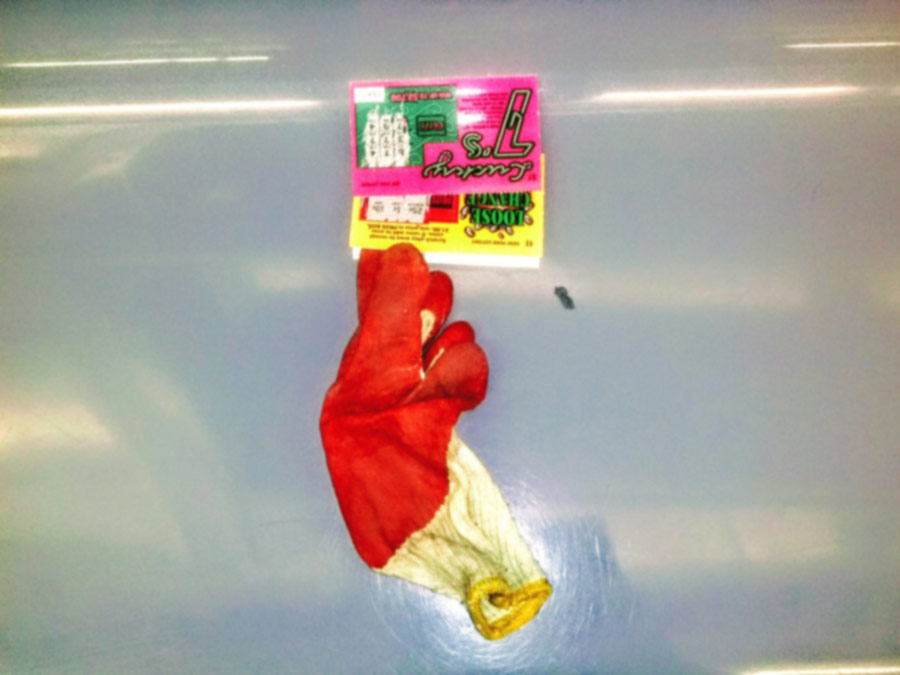
American Dream, Renée Jarvis, December 2014
My father’s hands are wrought iron. Rough and black, always twisting, with the kind of knots that only show at the joints if your fingers have been tousled too many times. In the winter his hands never sought refuge under mittens and gloves but longed for the clear Caribbean heat, parched by homesickness. In the summer, he would reminisce about real beaches; ones with white sand and turquoise sea, where you could look up and see the clouds, look out and see the ships, look down and see the fish. New York City beaches were muck and dust and murk to him, and New York City summers were stagnant, stifling things that muddled his mood. The other two seasons weren’t so egregious, but even after two decades in America he never failed to lament each year that spring bloomed trees barren with nothing to eat, and autumn only produced bland, crisp apples.
Still, he stayed. Waking at three in the morning, every day my father would shower, shave, dress up, skip breakfast, and leave the house for the hotel he worked tirelessly. He was never late, almost never absent. His vacation days could be stacked to reach the moon. Our money could not.
My mother’s hands became wrinkled long before any crow stepped on the corners of her eyes. The soft grooves in her skin told a story repeated — despite five generations and a whole new country, she lived the same wash and sweep and clean and cut and carry and soothe story lived by her foremothers. So much water had dried her palms out, leaving her to regularly lather those long brown fingers with the cocoa butter kept in her purse. On Sundays, she blasted Mahalia Jackson and hurriedly adorned her nails, painting the middle digits a different color from the other eight. The little joke never lasted too long, as washing dishes and watching children chipped away much of the polish by Wednesday.
She liked America more than my father. To her, there was something relieving about the changing of the seasons. Back home she had been teased growing up for hating the heat, carrying an umbrella no matter the weather. Island breeze didn’t do enough for her boiling blood, but the respite of autumn was always welcome. In this manner, housework and caregiving suited her — during summer, there was always air conditioning at work, which could not be said for our apartment.
My parents loved one another very much. They had to in a city, a country that did not love them at all. Two of the many vertebrae of this nation, they were left no choice to be each other’s backbones. Out of this love blossomed six beautiful children who somehow never missed a meal, even if that meal was crackers and hot chocolate for dinner, or broccoli stems and potted meat for breakfast. My siblings and I ate. We played, we loved, we fought, and we’d be damned if we didn’t pray and read too.
The six of us were all capable children, but I was the golden myth. The youngest, the smartest, the most likely to get rich, the one who excelled in each subject and remembered everything she had ever seen. Destined to become a lawyer, my mom would say, since I loved to lie and debate.
My father said I was destined to be a doctor because of my attention to detail and interest with the inner workings of the body. At age four I once asked him what people looked like behind our skin. From then on he was sold.
But when I gathered the courage to tell my parents I didn’t want to use my brain for law or for healing, they laughed at me.
“Yuh gyal,” my mother began, her syrup voice embellished by an amused rasp. “Yuh mussi tek wi fi fool.”
My father’s deep, loud voice jumped in, chuckling out words. “Ah joke yu ah joke?”
I, of course, was not joking at all. As I explained how serious I was about my dreams, how I’ve known what I wanted to do since I was eight and filling up my journals with sketches and doodles, I watched their faces fall flat into disbelief, then ripple up in anger. Each line on their faces was perforated with pain. I saw crimson disappointment and the throbbing ache of being forsaken. I was the one who was supposed to do this first generation thing right. I was the last one who could.
“Art is my dream!” I had said. “I want to create I want to paint and sculpt, and –”
“Yuh tink we come yah fi dreams?” my father erupted.
My mother recoiled a bit and blinked, conflict etched in the drooping corners of her mouth. My father’s brows twitched. They both knew well that that was all they had come to America for.
Dreams.
Each one of their beautiful babies was a dream, one for every night but the Lord’s. Each sibling before me faded into job-hopping mediocrity, save for my second-oldest brother who had gotten a decent government job with good pay. He was their proudest outcome, but I was their prized potential. They had left their own dreams behind decades ago, burying their desires under multiple jobs and prayer all for the chance to raise a great success. And now, I was throwing away all their work for “crayons and Play-Doh”.
We argued. My parents held on to their vicarious visions for my future and implored me to rethink. They couldn’t feel what I felt when I painted, nor could they see the inspiration I saw in the world around me, and I couldn’t feel the hope and the faith they had when they raised me all those years. I cried at least three times before I stormed out into the night, calling up any friend who would take me in for a few days.
My home became a haunted hollow. Each move I made was hardened, for fear that I would shatter again under their expectations. When the school I applied to accepted me, the space that had grown between my parents and me widened. Darkened. Morphed into a kind of silence I had never experienced in such a full house.
Despite that, I excelled without their approval, just as I had done with it. Four years of fine arts training, and I received not one question about my late hours in the studio, the job I kept to buy hundreds of dollars of art supplies, the galleries and the exhibits and the tons of drawings that piled up in my closet. They did not care about anything I did until I graduated. A degree, at the very least, was something to be respected, and watching me walk at commencement was the closest they would get to seeing their dreams for me come to fruition. But I added a small stipulation to their attendance.
After I walked, after we took the obligatory graduation photos that would surely be shown off to relatives, we took the E train back to my college. I took one hand each, telling them to cover their eyes with the other, and guided them into the building where my final project was on display. My father’s hard, citrus peel callouses graced my left palm; my mother’s soft, slack- skinned fingers pressed against my left. Once I let their hands go, I held my own out and told them to look down.
My hands are knotted, wrinkled and scarred, covered in evidence of my work. X-Acto knives have had their way with my flesh on numerous occasions. Holding paintbrushes for hours at a time swelled the upper corner of my right middle finger. Kneading and washing my hands sucked the bounce from my skin.
We compared our fingers to one another’s. I had my mother’s withering skin, my father’s callouses, and a lovely hybrid of the two — crinkly, round knuckles. I gestured behind me, then watched as they observed the six paintings.
They had never seen my work before that day and I felt the guilt leaching out of their eyes. Drifting in a sea of shapes sprinkled with gold and muddled by texture, they stood speechless. On the canvases before them were their hands, so realistically portrayed in shades of brown, each subtle arch and crackling line placed with tender diligence. The dabbled space around those hands shimmered in a lavender-emerald-cerulean celebration of the limbs that lifted and motivated me. And in each painting, complicated into a flower that sat in their cupped palms, were my hands, streak-stroked black and gold.
I saw my mother tearing up, and held in a jovial giggle.
“What is that quote you used to tell me, mom?”
“A mind…” She paused to swallow her emotion. “A mind is a terrible ting to waste.” My father nodded his head slowly, his lips slipping into a smirk.
“A dream is, too.”