
2019 Contest
Making Work Visible
City University of New York / Labor Arts
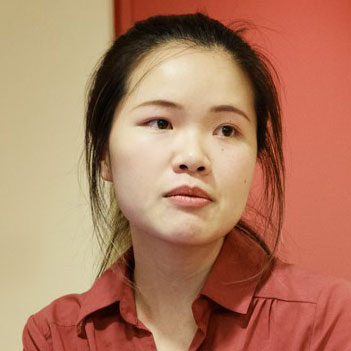
Bittersweet in a Kitchen
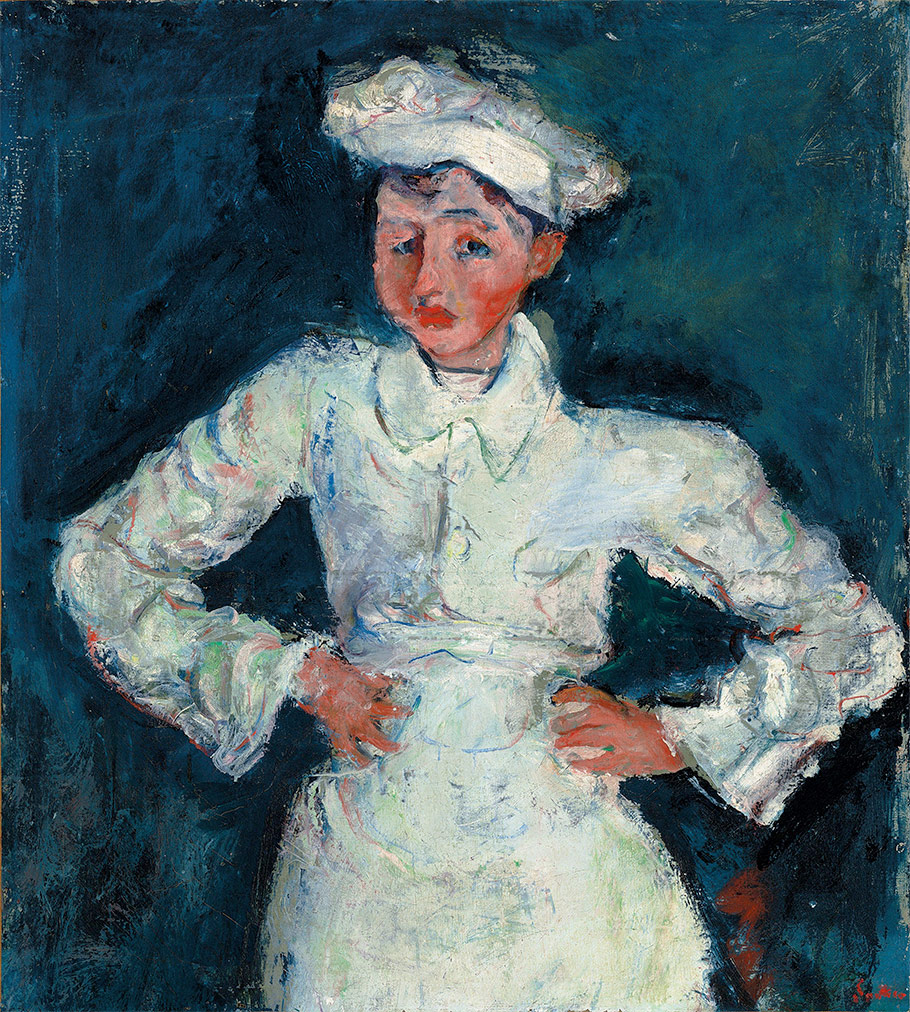
The Little Pastry Chef, Chaim Soutine, 2018
I work at the pastry kitchen of a Michelin starred French restaurant on the Upper East Side of Manhattan, where a lot of rich people live. It sounds exciting and I thought the same before I applied for this job. In the morning, this neighborhood around 75th St is very quiet. I see very few people when I am walking to the restaurant. The building is not as tall as other buildings in this area. It has a white creamy color from the surface and a black metallic color from the windows. The restaurant has many plants growing in the front door area. But they are covered with green plastic nets. A very warm light brightens them up. Sometimes, one or two huge delivery trucks with built-in fridges or freezers are nearby. I open the pale green door next to the main door, I walk past the sleepy security guy who sits in his tiny room with glass windows around him. Two floors down is where I get my uniform. This floor is also where they store all the fancy high quality French wines and dried ingredients from everywhere. Sometimes I have to walk around the hallway for my chef jacket because the stairway I usually use is blocked by bags of dirty chef uniforms that need to be washed from the previous night.
One floor up is our production kitchen. Fish tubs and big cambros that are big enough for me to put myself in are organized on the top right side of the stairway. The locker room is right next to the kitchen. After I finish changing, it is around 6:50 AM, a perfect time for me to start my shift. Waking up early and working for production instead of working at night for the service is what I have always wanted. However, my mind is so weak at this moment, all I want is to go back to my bed. I walk through the Feast and Fêtes station. One of the walk-in fridges is right behind this station. In front of it are all the cases of the extremely fresh produce that were just delivered. A blast chiller is on the right side. When the kitchen is too quiet, it means people have forgotten to turn the blast chiller on. To get to the pastry kitchen, I have to walk through the culinary kitchen. With its two 20 by 7- foot stainless kitchen tops. I also stop by the dish area to find extra detergent that I can steal for our kitchen, because we wash our utensils and all the bowls ourselves.
The pastry kitchen is only half the size of the savory kitchen. It has a ten-foot-long kitchen top on the left side against the wall of the kitchen, this area is where I do my tasks. Two double door cabinets above the kitchen top, three drawers and two single-door cabinets on the bottom left. The bottom right-side lowboys have fruit, fresh herbs, micro greens, and edible flowers. The hand washing sink is on the right side of the kitchen top. Behind me is a marble island kitchen top; usually three to four people work here. It includes the dough station, the canelé station, and the station for two sous chefs. All the way back is another kitchen top for the pastry cooks who make tuiles and cook the base of our frozen dessert, because this area is right in the front of the oven and very close to the stoves.
The chocolate room is my favorite place in this kitchen, I love the aroma of chocolate. I thought I was in heaven when I first opened the door of their chocolate room. People in this kitchen are in charge of different dessert components. I do not belong to any of the stations because I only work four days a week. So, I am here in charge of most of the biscuits, cremeux, mousses and the ganache of petit fours. Also, I reorganize the fruit and herbs every day. Beside these, I also help everyone else after if I finish my tasks early.
This is a very fast-paced kitchen. It was always my dream to work in a pastry kitchen and finally my dream has come true. However, I now realize it was more difficult than what I thought it could be. Even though I am pushing myself every day to work faster, I still get rushed in different ways every other second by my sous chefs. In the morning, they give me about 4 to 6 tasks. For example, bake 4 sheet trays of White Biscuit and 5 sheet trays of Flourless Chocolate Cake, make 6 kilograms of Apricot Mousse to finish building four sheet trays of Apricot Cake, unmold Coffee Mousse that was built into tubes before 11 AM, and make two flavors of ganache for bonbons. I must communicate with my chef and plan well before I start working. However, before I start on these tasks, I need to make sure all the fruit is reorganized. The fruit is a pain in the butt. We store fruits in three places, lowboys below the kitchen top where I work, a speed rack next to the tuile station, and another speed rack in our walk-in fridge. It is easier in the summer because our restaurant does not offer Restaurant Week deals. Rich people are out of the city for their summer vacations. In other words, “we are slow,” which means less fruit for me to organize in the mornings. The speed racks and lowboys are not as crowded as they are in the winter. Berries turn bad very fast because of the rain these days. I must keep the older berries in a cambro in our walk-in fridge when I organize them. At the end of the day, with another 10 percent of the sugar added, we make flavorful wild berry puree out of it.
Finally, after organizing the fruit, I am ready to begin my tasks of the day. I normally start around 8 AM. We have only two ovens that work well. The top oven, with six racks, is always needed for the dough station. At 9 AM, the bottom oven will be occupied by 300 canelés so it is better for me to finish my baking tasks before 9 AM. However, it is not easy for me to finish two tasks in one hour. If I still need to use the oven after 9 AM, I must negotiate with the person who is in charge of the dough station. It happens almost every day. When it gets to 9:15 AM, you will hear someone call out “change sanitizer.” We must stop whatever we are working on and dump the sanitizing liquid in our station into the sink. I refill the sanitizer most of the time because everyone else looks busy with their tasks. Now, the kitchen is getting noisier. My heart beat goes faster too. The noises are intense from the Kitchen Aid mixer, Hobart mixer, large hand blender, torch, oven timer, other people’s personal timers and my timer. Plus, culinary chefs will come to our kitchen and say “good morning” or ask questions. Someone comes to get some flour, someone comes to use our larger scale, or someone comes to bring some scraps from their production for us to try. If my French sous chef walks past me, he would say: “Pretty much done?” and then “allez, allez, allez,” In addition, we have to wash our own equipment and utensils that we use because we don’t want them to be washed together with equipment and utensils from savory kitchen. Otherwise, our products might have an herby or meaty aroma. I hear terms like “organize dish” every hour. It means all of us must stop our work on hand, go to the dish sink and help the dishwasher organize the dishes. Sometimes I just want to find somewhere quiet and stay there for about 5 minutes. Sometimes I go to the restroom to take a deep breath and go back to work. Most of the time, the tasks on my list block me from walking away from my station.
Coffee Tube is the main component for one of our desserts. It is built of chocolate mousses with coffee cremeux in the center. We roll sheets of soft plastic and build the tube dessert inside them a day before. Sometimes I get to build them. This time my job is to cut them in two different lengths, 5 cm and 8cm, and then unmold them. I need to have my mise en place first. The most important thing is a chilled full sheet tray-size marble. It keeps the tubes from melting so fast in the hot kitchen, so we can avoid having to refreeze them, which will change the texture of the mousse. I’m very short and thin and it is really hard for me to take out this huge piece of super heavy marble from the bottom shelf of the lowboy. I need to bend down a little bit, and put down my chest, but also make sure that my lower back is straight. This way I can protect my spine from dislocating because my spine gets dislocated easily. It has already happened four times in my life. The tubes will be sprayed with a thin layer of clear glaze after they are unmolded and well organized on full plastic sheet trays. When evening shift workers come, they will apply sticks of chocolate horizontally onto the tubes. The person who will spray the tubes often asks me about how long it will take me to finish them because most of the time I deal with more than one task at a time. I only tell her an approximate time of about 30 minutes. I place the tubes that are cut into the blast chiller before I unmold them. It takes about 15 minutes for them to be fully frozen like rocks and this is the stage that I want. I can start to do some mise en place for making the Apricot Mousse, then come back for the tubes.
Sometimes I forget to take out the frozen apricot puree to thaw ahead of time for the Apricot Mousse. I have to waste another 15 minutes to melt it down in the microwave. You may ask me why I don’t scale it out and heat it up in the pot because it only takes five minutes. This is because my sous chef said that the water in the puree evaporates more if I heat it in a pot to melt it down. It will change the final texture of the Apricot Mousse. To make 6 kilograms of mousse is not an easy task for me. The prepping process is not hard, I just need to have my puree warmed up and mixed with the gelatin, and then I whip the heavy cream and keep it cold. I also need to make the Italian meringue but first I need to take out the tubes and unmold them. My satisfaction is exploding from my heart when I see how these tubes are perfectly unmolded. The surface of the tube is shiny like plastic sheets. I want to enjoy this moment a little bit more but I cannot just stop there for this lovely feeling. I have to move on to the Apricot Mousse.
Italian Meringue, the key ingredient in the mousse, is made with egg whites whipped up with sugar that is cooked to 240 F degrees when the sugar syrup just becomes firm but shapeable. I walk back and forth between the Kitchen Aid mixer at where I work and the stove to make sure that the egg whites are not over whipped and the sugar is also cooked properly to the stage before I pour the sugar into the whipped egg whites. Once the meringue is made, I have to use it right away to make the Apricot Mousse because the air pockets in the meringue will break when the machine stops mixing. I need the largest bowl in the kitchen, the longest whisk and a spatula to fold all the ingredients together. Mixing the meringue with the puree is my first step. To mix it well, I have to be very aggressive with the mixture. When more and more meringue is added, my right arm starts to get sore from my wrist to my elbow, and then to my shoulder. I feel the mixture is getting heavier and heavier. I feel my muscle is crumbling inside my arm. I continue to use my strength to fold and fold and fold and fold until I feel like the mousse is pushing against me to continue my movement. Then I use my left arm to continue this folding process. Luckily, I am ambidextrous in the kitchen. After I finish folding in the Italian meringue, I still have to fold a huge batch of whipped cream into the mixture. The more cream I add, the more tired my arm becomes. My body heat is coming up from my back, I start to sweat. I have to alternately use my left hand to fold the whipped cream in. I also make sure the bowl is rotating while I am folding. But the mousse begins to come up to the rim of the bowl and my hands are getting some of the mousse too. The stickiness on my hand and slippery rim of the bowl bother me in every movement. I have to stop my work to clean my hands and the rim of the bowl. The hunger from my stomach always comes out at this kind of moment. At 11 AM, it is time to change our sanitizer again… I continue to finish folding the mousse with a rubber spatula to make sure that the cream and the meringue are nicely incorporated with each other. My body tells me my arms are not my arms anymore, but my mind tells me that this beautiful look of the texture of the mousse is gorgeous.
It is hard to maintain cleanliness for a large kitchen, so we decide to clean it both before lunch and at the end of our shift. Cleaning is another big task. We make sure all productions are organized, we have to scrub all the equipment, fridges and freezers with soapy water and then dry up. The handles are the dirtiest spots. Scrubbing handle areas one time is not enough. I have to scrub them at least two rounds with very soapy water, and then I use the sport towels to wipe them down one more time with pressure before I dry them up. Not finished yet, I still have to check the cleanliness of handle areas again before we leave the kitchen for lunch because people are still putting their productions into fridges or freezers with their dirty hands. At the end is sweeping and mopping the floor. We need to make sure every corner is cleaned up. When I sweep or mop, I always bend my knees and try to clean the best for the bottoms of our table tops. To make everything clean, nice and perfect is where I find my satisfaction. My lunch break is normally about 15 minutes. I love sitting down peacefully for some rest. The best feeling is when I know that I have already finished most of my tasks and I learn more about pastries each day working in the kitchen. I always end up exhausted because of the heavy production that was assigned to me, but just like some of the pastries we make, working here is bittersweet.